Is Losing 50 Pounds Realistic?
Yes, losing 50 pounds is realistic — but it requires understanding your body’s energy balance. The key is your TDEE (Total Daily Energy Expenditure), which tells you exactly how many calories you burn each day. Once you know that number, creating a safe deficit becomes straightforward.
At a deficit of 500 calories per day, you lose approximately 1 pound per week. To lose 50 pounds at a steady, sustainable pace, that’s roughly 50 weeks — just under one year.
Step 1: Calculate Your TDEE
Before anything else, you need to know your TDEE. This number accounts for your basal metabolic rate (BMR) plus all your daily activity. Use our free TDEE calculator to get your number in under a minute.
For example, a 35-year-old woman weighing 200 lbs, standing 5’5″, with a lightly active lifestyle has a TDEE of approximately 2,100 calories per day.
Step 2: Set Your Calorie Deficit
To lose weight, you need to eat fewer calories than your TDEE. The recommended approach for a 50-pound weight loss is a 500–750 calorie daily deficit, which produces 1–1.5 lbs of fat loss per week.
- Conservative (–500 kcal/day): ~1 lb/week → 50 weeks to goal
- Moderate (–750 kcal/day): ~1.5 lbs/week → ~33 weeks to goal
- Aggressive (–1000 kcal/day): not recommended — risks muscle loss and metabolic adaptation
Realistic Timeline: Week by Week
Here is what a healthy 50-pound weight loss journey looks like at 1–1.5 lbs per week:
| Milestone | At 1 lb/week | At 1.5 lbs/week |
|---|---|---|
| –10 lbs | Week 10 | Week 7 |
| –20 lbs | Week 20 | Week 13 |
| –30 lbs | Week 30 | Week 20 |
| –40 lbs | Week 40 | Week 27 |
| –50 lbs | Week 50 (~12 months) | Week 34 (~8 months) |
Step 3: Prioritize Protein
When losing 50 pounds, protecting your muscle mass is critical. Aim for 0.7–1g of protein per pound of body weight. Protein keeps you full, preserves muscle, and has a high thermic effect — meaning your body burns more calories just digesting it (20–30% of protein calories vs. 0–3% for fat).
Best protein sources for weight loss:
- Chicken breast (31g protein / 165 kcal per 100g)
- Greek yogurt (10g protein / 59 kcal per 100g)
- Eggs (13g protein / 155 kcal per 100g)
- Salmon (25g protein / 208 kcal per 100g)
- Cottage cheese (11g protein / 98 kcal per 100g)
- Lentils (9g protein / 116 kcal per 100g)
Sample Daily Meal Plan (1,600 kcal)
If your TDEE is 2,100 kcal, eating 1,600 kcal creates a 500-calorie deficit for ~1 lb/week loss:
- Breakfast: 2 eggs + 1 cup Greek yogurt + berries (~400 kcal, 35g protein)
- Lunch: Grilled chicken breast + salad + olive oil dressing (~450 kcal, 40g protein)
- Snack: Cottage cheese + apple (~200 kcal, 15g protein)
- Dinner: Salmon + roasted vegetables + quinoa (~550 kcal, 38g protein)
Total: ~1,600 kcal | ~128g protein
Step 4: Add Strength Training
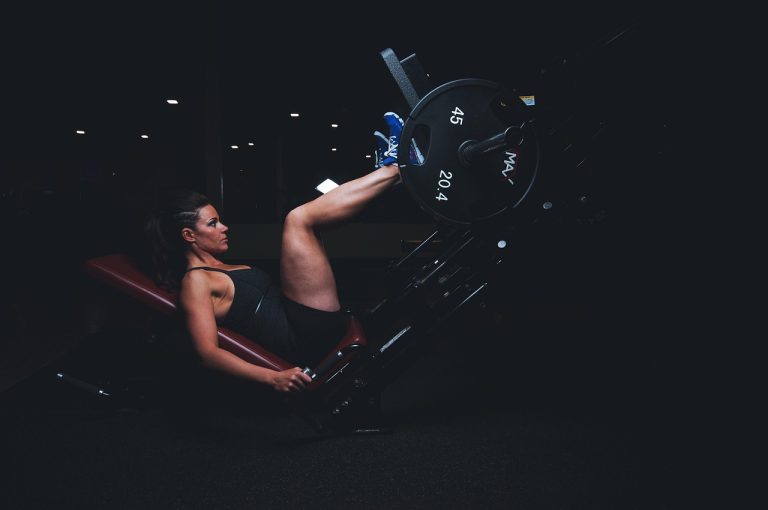
Cardio burns calories during the session, but strength training reshapes your body and keeps your metabolism elevated after the workout (the afterburn effect). Aim for 3 sessions per week of 45–60 minutes, focusing on compound movements:
- Squats, deadlifts, lunges (lower body)
- Push-ups, bench press, rows (upper body)
- Plank, dead bug (core)
People who combine strength training with a calorie deficit lose significantly more fat and less muscle than those who only diet.
Step 5: Adjust as You Lose Weight
As you lose weight, your TDEE decreases. A person weighing 150 lbs burns fewer calories than the same person at 200 lbs. Recalculate your TDEE every 10–15 pounds lost to keep your deficit accurate. Use our TDEE calculator each time you hit a milestone.
Step 6: Track and Stay Consistent
The biggest factor in a 50-pound weight loss is consistency over time. People who track their food intake are significantly more likely to reach their goals. Log meals using an app or spreadsheet, and weigh yourself weekly (same time, same conditions) to spot trends.
Common Mistakes to Avoid
- Eating too little: dropping below 1,200 kcal/day (women) or 1,500 kcal/day (men) triggers muscle loss and metabolic adaptation
- Not adjusting TDEE as weight changes: your deficit shrinks as you lose weight unless you recalculate
- Ignoring liquid calories: juices, alcohol, and coffee drinks can add 300–500 kcal invisibly
- Skipping strength training: without resistance exercise, up to 25% of weight lost can be muscle
- Expecting linear progress: weight fluctuates daily by 1–3 lbs due to water retention; judge by weekly averages
What Losing 50 Pounds Does to Your Body
Beyond appearance, losing 50 pounds produces measurable health improvements:
- Reduced risk of type 2 diabetes by up to 58% (in overweight individuals)
- Lower blood pressure and LDL cholesterol
- Reduced joint stress — each pound lost removes ~4 lbs of pressure from the knees
- Improved sleep quality, including reduction of sleep apnea symptoms
- Higher energy levels and improved cardiovascular capacity
Final Thoughts
Losing 50 pounds is a 8–12 month project built on consistent energy management. Calculate your TDEE, create a 500–750 kcal deficit, eat enough protein, add strength training 3x/week, and recalculate every 10–15 lbs lost. That formula works every time.